
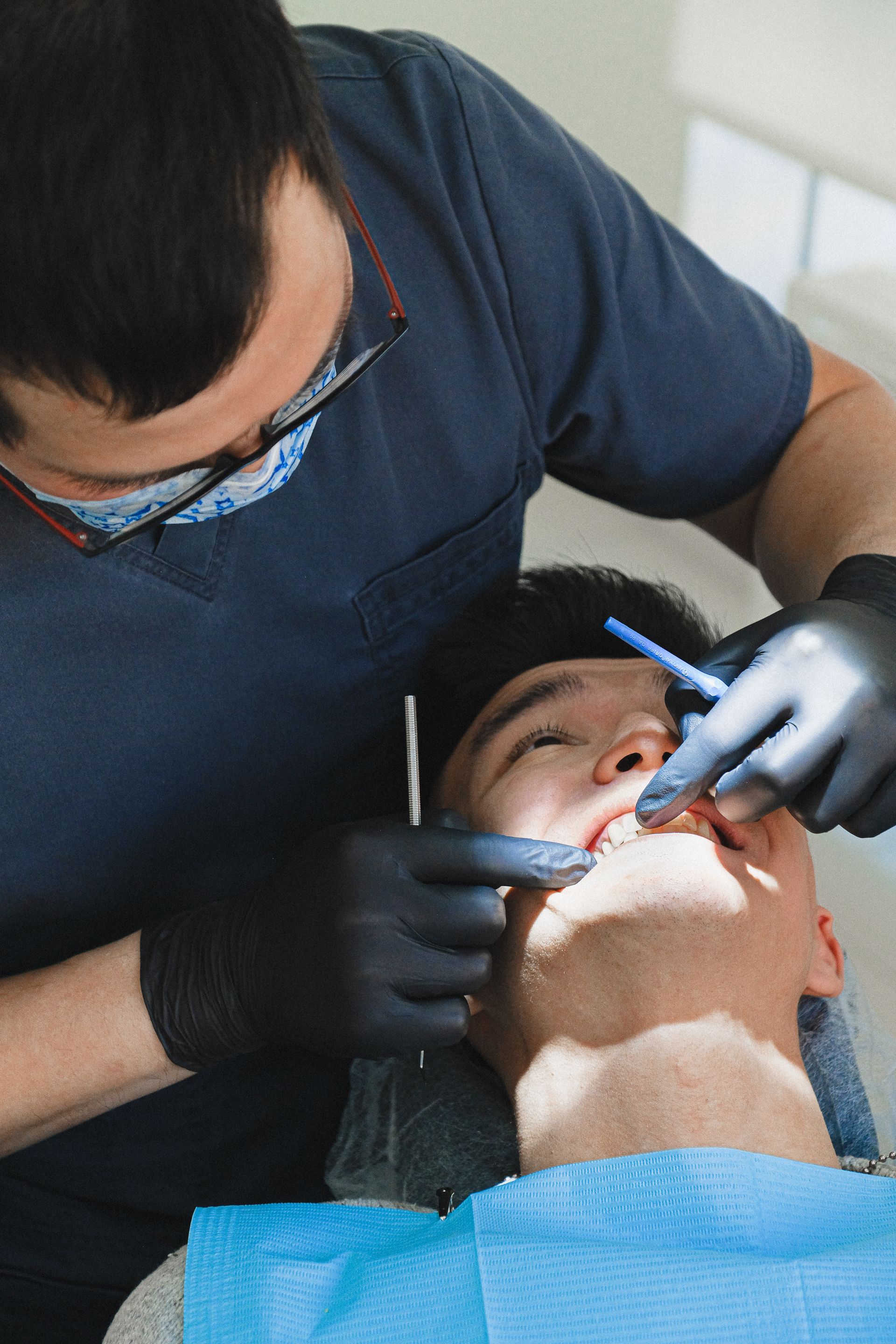
Why cracked teeth are so difficult to diagnose
A crack in a tooth doesn't behave like other dental problems. It doesn't appear on a standard X-ray. The pain is sharp and momentary — triggered by biting in a very specific direction, then gone, making it almost impossible for patients to describe and easy for providers to dismiss. The crack may be microscopic even under direct examination, invisible unless you know exactly where to look and how.
What makes the diagnosis possible is the right equipment: transillumination, dye staining, a precisely positioned bite stick, and most importantly a surgical operating microscope that reveals fine fracture lines invisible to the naked eye. That's the endodontist's advantage, and it's why patients referred after months of unexplained pain consistently find their answer here.
The spectrum of cracks — and what each one means
Not all cracks are the same, and the treatment, and the prognosis, depends entirely on where the crack is and how far it extends.
- Craze lines. Surface-only cracks in enamel. Common, cosmetic, no treatment required.
- Fractured cusp. A piece of tooth breaks off, usually from around an old filling. Often treated with a crown; the pulp is usually not affected.
- Cracked tooth. A crack runs vertically from the crown toward the root. If it reaches the pulp, root canal treatment followed by a crown is necessary. If it reaches below the gum line, the prognosis worsens significantly.
- Split tooth. The crack has completely divided the tooth. In most cases, the tooth cannot be saved and must be extracted, though in rare cases one portion can be preserved.
- Vertical root fracture. A crack starting at the root tip and extending upward. Usually discovered when a previously treated tooth develops infection that doesn't resolve. Extraction is typically the outcome.
What happens at your appointment
We begin with a thorough history — which tooth, exactly what triggers the pain, how long it's been happening. Then a systematic clinical examination: percussion, bite testing, cold testing, heat testing, and probing the gum pocket around each root. We use transillumination and bite sticks to locate the crack under the microscope.
If the location and depth of the crack remain unclear from clinical examination alone, a focused cone beam CT scan provides the three-dimensional view that standard X-rays can't. In some cases, we can confirm the extent of a crack and give you a definitive prognosis within a single appointment. In others, we may recommend a crown first to protect the tooth while we observe how the pulp responds.
What we will always do: tell you what we found, what it means for your tooth, what treatment options exist and what they cost, and and what the expected outcome is for each path, including the honest option that this tooth may not be saveable. Then the decision is yours.
Common questions
My dentist couldn't find anything wrong — why would you?
Because the equipment is different. A crack that's invisible at 1× magnification under an operatory light often becomes clearly visible at 10–16× under a surgical microscope with transillumination. This isn't a criticism of your dentist — it's a statement about what specialist equipment changes.
Can a cracked tooth heal on its own?
No. Unlike a bone, a tooth cannot repair a fracture. Without treatment, most cracks progress — gradually, or occasionally suddenly. The treatment changes as it gets worse; the sooner it's diagnosed, the more options you have.
What if the crack is too deep to save the tooth?
We'll tell you — clearly and before any irreversible treatment is started. A tooth with a crack extending well below the gumline or a complete vertical root fracture is almost never saveable. Extracting it and replacing it with an implant is the right path, and we'll help coordinate that with your general dentist.
Will I need a root canal?
Not always. It depends on whether the crack has reached the pulp and whether the pulp is responding to it. Cracks caught before pulp involvement may need only a crown. Once the pulp is inflamed or infected, root canal treatment is necessary before crowning.